
Industrial Plumbing Expectations vs Reality in Melbourne
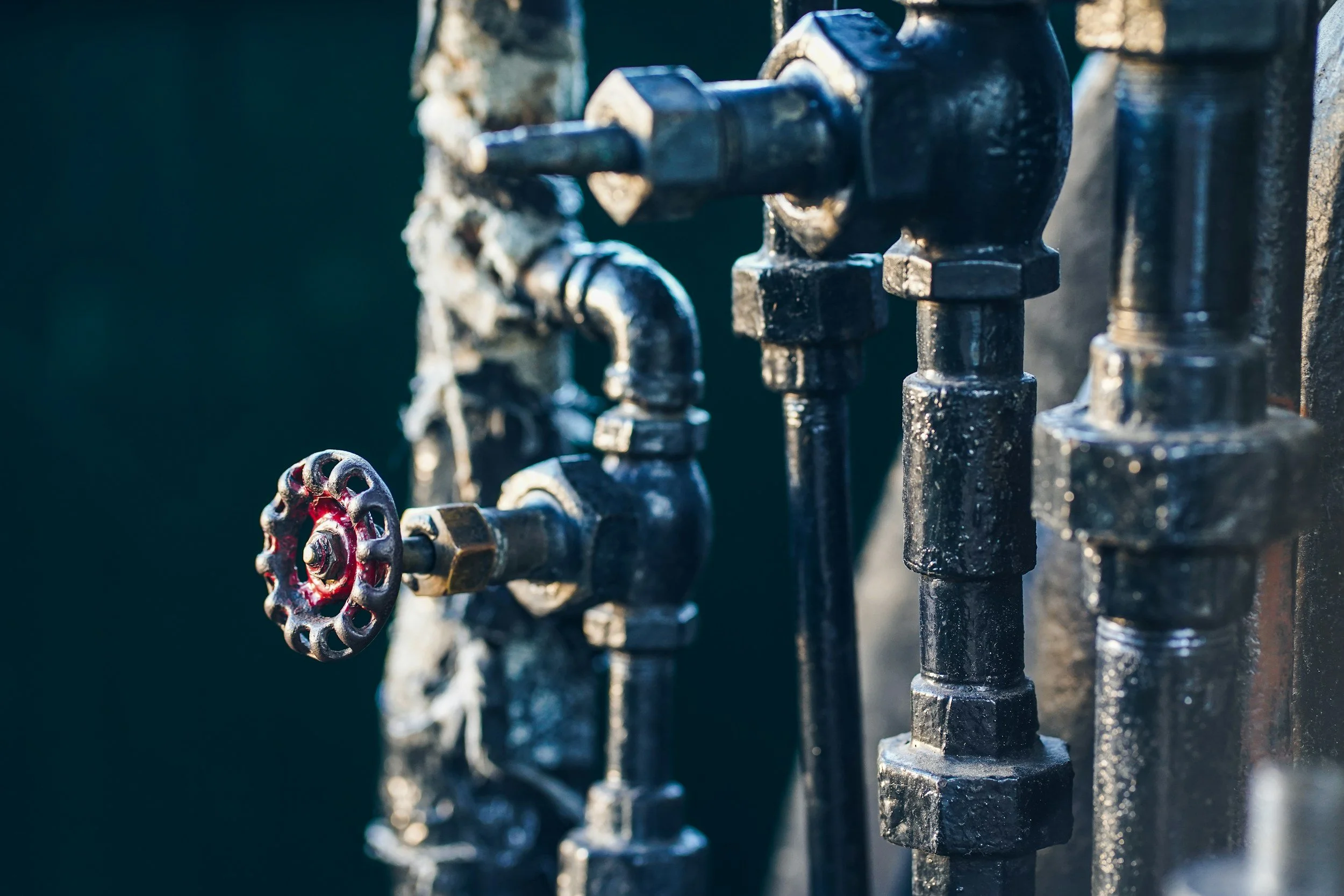
The common expectation about industrial plumbing
“Why industrial jobs rarely go to plan” often starts with a simple assumption: that industrial plumbing is just commercial plumbing at a larger scale.
On paper, it feels straightforward.
You define the scope, get a quote, set a timeline, and expect the work to move from inspection to installation to completion in a clean, predictable sequence. For many businesses, especially those used to office or retail fit-outs, this expectation comes from past projects that followed a relatively linear path.
There is also a natural tendency to believe that most variables can be resolved upfront:
The site is reviewed once
The system requirements are clear
The timeline is mapped end to end
And the job simply executes from there
In that model, any variation feels like an exception.
But this expectation is often shaped by limited visibility into what actually happens on industrial sites, particularly across Melbourne where infrastructure, compliance, and operational constraints vary widely from one facility to another.
In reality, industrial plumbing projects are not just about installing or upgrading pipework. They sit inside a much broader system, one that includes:
existing infrastructure, sometimes decades old
active operations that cannot easily pause
multiple stakeholders with different priorities
and regulatory requirements that influence how work is carried out
The result is a gap, not because something is going wrong, but because the original expectation was based on a simplified version of how these projects work.
Understanding that gap is what allows better planning decisions. Not tighter control, but more realistic control.
The real-world reality on industrial sites in Melbourne
It’s not just plumbing, it’s system coordination
One of the biggest shifts from expectation to reality is this: industrial plumbing is rarely a standalone task.
Instead, it sits inside a wider system where multiple elements need to align at the same time. On many Melbourne industrial sites, plumbing work is closely tied to:
mechanical systems
electrical infrastructure
structural access points
safety and compliance requirements
This means progress often depends on factors outside the plumbing scope itself.
For example, a section of pipework might be ready to install, but access is blocked until another team completes their part. Or a design needs to be adjusted because of how it interacts with existing systems that were not fully visible during the initial inspection.
So while the expectation is “install the system,” the reality is closer to:
coordinate multiple systems, adjust based on site conditions, and move forward when dependencies are resolved.
This is where many timeline assumptions begin to shift.
Timelines evolve, not just execute
In a typical expectation model, timelines are treated as fixed from the beginning. Once agreed, the job is expected to follow that schedule closely.
On industrial sites, timelines are better understood as evolving frameworks.
Initial estimates are based on what is known at the time. But as work begins, new variables often appear:
previously hidden pipe runs or connections
access limitations that were not obvious during planning
adjustments required to meet compliance standards
coordination delays between teams
These do not necessarily indicate poor planning. They are a natural outcome of working within complex, real-world environments.
In Melbourne, this is especially relevant on sites that combine older infrastructure with newer upgrades. What looks straightforward on drawings can become more involved once systems are opened up and assessed in detail.
The key difference is this:
Expectation: timelines are fixed and deviations are problems
Reality: timelines adapt as more accurate information becomes available
Understanding this early helps set more realistic expectations for delivery.
Work rarely happens in a clean sequence
Another common expectation is that work will follow a neat, step-by-step process.
In practice, industrial plumbing work is often phased, interrupted, or rearranged.
This is usually driven by operational constraints. Many industrial facilities in Melbourne cannot fully shut down their systems, which means work has to be planned around:
production schedules
partial system availability
safety requirements for active environments
As a result, instead of completing one stage fully before moving to the next, teams may:
complete part of the work
pause while operations resume
return later to continue or finalise the installation
This creates a stop-start rhythm that can extend timelines but is necessary to keep the business running.
So while the expectation is a continuous workflow, the reality is a staged approach that balances progress with operational continuity.
Compliance shapes the job from the beginning
It is easy to think of compliance as something checked at the end of a project. In industrial plumbing, especially in Melbourne, it plays a role much earlier.
Permits, inspections, and regulatory requirements influence:
how systems are designed
what materials can be used
when certain stages can proceed
how work is documented and approved
In some cases, work cannot move forward until a specific inspection is completed. In others, adjustments are required mid-project to meet updated or clarified standards.
This means compliance is not a final checkpoint. It is an ongoing factor that shapes decisions throughout the project.
The expectation might be “build first, approve later.”
The reality is closer to “plan, build, and verify in parallel.”
Why the gap exists (mechanisms and decision variables)
Understanding that expectations and reality differ is useful. Understanding why they differ is what actually improves decision-making.
Across industrial plumbing projects in Melbourne, a small set of variables consistently shapes how a job unfolds. These variables do not just influence outcomes. They determine whether the original expectations were realistic in the first place.
Site condition (legacy vs modern systems)
One of the biggest drivers of variation is the condition of the existing infrastructure.
On newer sites, systems are typically documented, standardised, and easier to work with. On older industrial sites, it is common to encounter:
undocumented modifications
ageing materials
layouts that have evolved over time
This creates a situation where what is seen during the initial inspection is only part of the picture.
Once work begins and systems are opened up, additional adjustments may be required. These can include rerouting, reinforcement, or partial replacement.
Expectation: the existing system supports the new work as planned
Reality: the existing system may need to be adapted before new work can proceed
This is one of the main reasons timelines and scope can shift after work begins.
Operational constraints (downtime vs live environment)
Industrial sites rarely have the flexibility to fully shut down operations.
In many Melbourne facilities, plumbing work needs to be carried out while:
production continues
certain systems remain active
safety protocols limit access or timing
This changes how work is executed.
Instead of completing tasks in one continuous block, work is often broken into stages that fit around operational windows. This can mean:
working during specific hours
isolating only parts of a system at a time
revisiting the same area multiple times
Expectation: the job progresses continuously until completion
Reality: the job progresses in phases to maintain business continuity
This is not inefficiency. It is a constraint-driven approach that protects operations.
Compliance layers (standard vs high-regulation sites)
Not all industrial sites operate under the same level of regulatory oversight.
Some projects involve relatively straightforward compliance requirements. Others, especially those dealing with waste management, chemicals, or high-volume water systems, require more rigorous controls.
In Melbourne, this can introduce:
additional approval steps
staged inspections
stricter documentation requirements
Each of these adds time and structure to the project.
Expectation: compliance is a final sign-off
Reality: compliance introduces checkpoints throughout the process
These checkpoints can pause progress, require adjustments, or influence how work is sequenced.
Stakeholder complexity (single vs multi-party approval)
Another factor that is often underestimated is how many people are involved in decision-making.
On some projects, there is a single point of contact who can approve changes quickly. On others, decisions may involve:
operations teams
safety officers
facility managers
external consultants
Each additional stakeholder introduces coordination overhead.
This does not just affect communication. It affects how quickly decisions can be made when conditions change on-site.
Expectation: decisions are made quickly as needed
Reality: decisions may require alignment across multiple parties
This can extend timelines, especially when unexpected adjustments are required mid-project.
Section Insight
When these variables combine, the gap between expectation and reality becomes easier to understand.
It is not caused by a single issue. It is the result of:
infrastructure uncertainty
operational limitations
regulatory requirements
and human coordination
Once these are recognised early, the goal shifts from trying to eliminate variability to planning for it in a controlled way.
What to check before committing (reduce surprises)
If the gap between expectation and reality comes from hidden variables, the goal is not to eliminate those variables. It is to bring them into the open earlier.
The following checks help shift a project from reactive to prepared.
How is uncertainty handled in the plan?
Most industrial plumbing projects include some level of unknowns. The difference is whether those unknowns are acknowledged upfront or only addressed when they appear.
A useful question to ask is:
“What happens if site conditions change once work begins?”
You are not looking for a perfect answer. You are looking for signs that the plan includes:
staged work rather than a single fixed sequence
contingency thinking, not just best-case assumptions
a process for adjusting scope without disrupting the entire project
This is often where realistic timelines are built.
What does the initial inspection actually cover?
Not all inspections provide the same level of insight.
Some are surface-level, focused on visible access points and general scope. Others go deeper into how systems are configured and where risks may exist.
Before committing, it helps to clarify:
what has been physically inspected versus assumed
which parts of the system are still uncertain
whether further investigation may be needed once work starts
Expectation: everything has been confirmed upfront
Reality: some elements are only confirmed during execution
Knowing this distinction early reduces friction later.
How will operations be affected during the work?
On active industrial sites, this is one of the most important considerations.
You want to understand:
whether systems need to be shut down fully or partially
how long any downtime may last
whether work will be staged around operational hours
This gives you a clearer picture of how the project will interact with day-to-day business activity.
A well-planned approach will outline:
when disruptions are expected
how they will be minimised
and what flexibility exists if schedules need to shift
What compliance steps are already factored in?
Compliance is often where delays feel unexpected, especially if it is treated as an afterthought.
Instead, it should be visible from the beginning.
Key things to clarify:
which permits or approvals are required
when inspections are scheduled within the project timeline
whether any dependencies could pause progress
This helps you see whether the timeline reflects real approval cycles, not just installation time.
Who is responsible for coordination across trades?
Because industrial plumbing rarely happens in isolation, coordination plays a major role in how smoothly the project runs.
It is worth confirming:
who is managing communication between different teams
how scheduling conflicts are handled
where responsibility sits if timelines need to be adjusted
Clear coordination reduces the risk of delays caused by misalignment rather than technical issues.
Section Insight
These checks are not about adding complexity. They are about making complexity visible early.
When these areas are clarified before work begins:
expectations become more grounded
timelines become more flexible in the right way
and surprises become manageable rather than disruptive
Summary, what good looks like in practice
By this point, the gap between expectation and reality is no longer a problem to fix. It becomes something you can plan around with more confidence.
A well-run industrial plumbing project in Melbourne does not rely on everything going exactly to plan. Instead, it is built on the understanding that conditions will evolve and decisions will need to adapt.
In practice, “good” looks like this:
Uncertainty is acknowledged early: Rather than assuming everything is known upfront, the project allows for discovery as work progresses
Timelines are flexible in the right places: Not vague, but structured to account for staging, coordination, and approvals
Compliance is part of planning, not an afterthought: Requirements are considered from the beginning, reducing the risk of delays later
Communication is clear and ongoing: Especially where multiple stakeholders or trades are involved
Work is staged around operations, not against them: Protecting business continuity while still making steady progress
This shifts the goal from trying to create a perfectly predictable project to creating one that can adapt without disrupting operations.
That is often the difference between a project that feels unpredictable and one that feels controlled, even when variables change.
For a deeper breakdown of what industrial sites in Melbourne typically require and how those requirements shape project planning, see: Industrial Plumbing in Melbourne: What Industrial Sites Actually Need